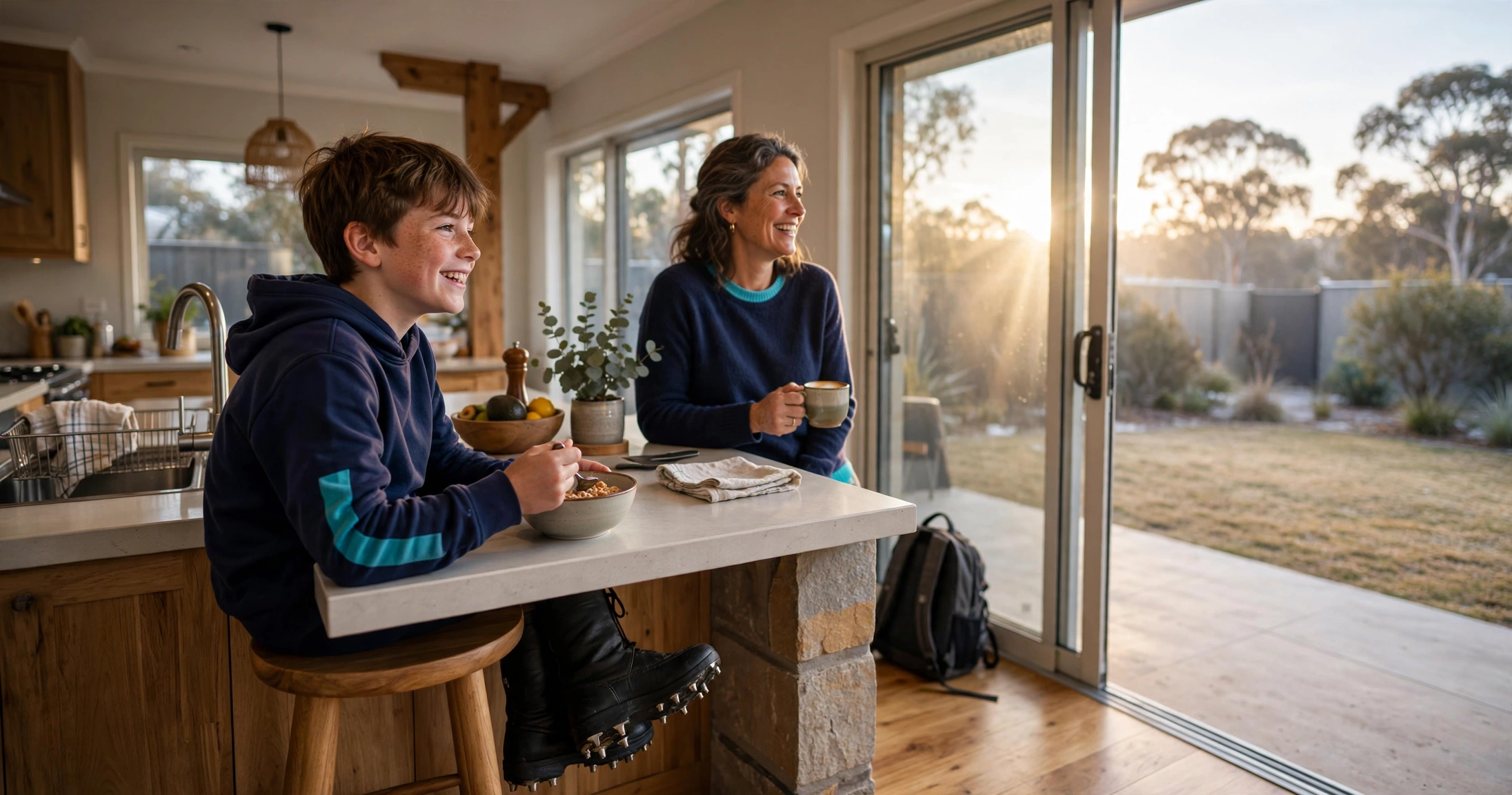
Your kid made finals. Somewhere between Monday and Saturday, you are going to feel an urge to do something about it.
That urge is the problem.
Finals week is when families start adding things. An extra kicking session in the backyard. A talk about focus. A better breakfast, a new pair of boots, slightly more advice than usual on the drive to training. Every one of those is well meant, and every one of them tells a ten-year-old the same thing: this week is different, so you need to be different too.
They can’t be different. They’re ten. All you’ve done is move the ground underneath them in the week they most need it to stay still.
Why finals week goes wrong before anyone gets to Saturday
Sport psychologists are fairly consistent on why pre-game routines help kids: it isn’t the routine itself, it’s the repetition. Doing the same things in the same order, week after week, is what turns a warm-up into a signal. The body recognises the pattern and settles.
Which means the routine is only worth anything while it stays the same.
So the week you decide to improve it is the week it stops doing its job. Extra training in finals week doesn’t add skill, because skill doesn’t move in five days. What it does add is a message: the normal amount wasn’t enough. That’s a heavy thing to hand a kid on a Wednesday.
The good version of finals week is boring. Same training, same dinner, same bedtime, same amount of talking about footy as any other week. Which is to say: not much.
The week before: change almost nothing
Three things worth actively protecting.
- The normal schedule. If Tuesday training is the usual hour, keep it the usual hour. If your kid has a piano lesson on Thursday, they still have a piano lesson on Thursday. Cancelling other things to “focus on the final” makes the final enormous.
- The normal amount of footy talk. If you’d usually ask how training went and then move on, do that. Finals week is when parents start circling back to it at dinner, and kids notice.
- The gear. Do not buy new boots. Whatever’s on their feet has been broken in over a season, and the one Saturday you don’t want a blister is this one.
And one thing worth actually doing: get the logistics sorted early. Find out the ground, the time, and where you’re parking, on Wednesday rather than Saturday morning. A calm car trip is worth more than anything you’ll say in it.
The night before: sleep is the one lever worth pulling
If you only change one thing all week, make it bedtime, and make it earlier.
A study led by Matthew Milewski at Children’s Hospital Los Angeles, published in the Journal of Pediatric Orthopaedics, followed 112 teenage athletes across a season. The ones averaging under eight hours of sleep a night were 1.7 times more likely to get injured than the ones who slept more. Sleep was one of the two strongest predictors in the whole study.
That was teenagers, not eight-year-olds, and it was about injury rather than performance. But it points at something worth taking seriously: sleep is doing more work than almost anything else you could add, and it’s the one thing families routinely trade away in a big week.
The night before a final, the useful move is not a pep talk. It’s lights out twenty minutes earlier than usual, phone out of the room, and a completely ordinary evening in between.
They probably won’t sleep brilliantly. Kids rarely do before something they care about. Getting them into bed earlier means the poor sleep still adds up to enough.
Saturday morning, and the ten minutes before they run out
Keep breakfast familiar. This is not the day to introduce porridge to a child who eats Weet-Bix. Whatever they normally eat before a game, two to three hours out, is the right answer, because their stomach already knows it.
Get there early enough that nobody is rushing. Rushed parents make anxious kids, and they do it without saying a word.
Then, in the last few minutes, give them one job. One. Something they control and can actually do.
“Go hard at the first contest.” “Talk to your teammates.” “First one to every ball-up.”
Not “have fun”, which is lovely and means nothing at 9am on a grand final morning. Not “kick a goal”, which is an outcome they can’t control and a way to fail before quarter time. One physical, doable thing gives a nervous brain somewhere to put itself.
Then stop. Say something warm that has nothing to do with the game, and let them go.
What to do if they’re genuinely nervous
Some kids arrive at a final white-faced and quiet. That’s not a warning sign. That’s a kid who cares.
Don’t try to talk them out of it. “Don’t be nervous” has never once worked on anybody, and it adds a second problem: now they’re nervous and they think they shouldn’t be.
Name it as a body thing instead. Their heart is going, their hands are cold, their stomach feels wrong. That’s the body getting ready, and it happens to every player out there including the best one on the ground. Nerves and readiness feel almost identical from the inside, and kids find that genuinely reassuring because it’s true.
Then get them moving. Nerves sit still and get worse. A kick-to-kick in the car park does more than any conversation.
The other thing that steadies a kid before a big game is evidence. Not encouragement, evidence. A kid who can point to what they’ve actually done this season stands in that huddle differently to one who’s just been told they’ll be fine. That’s the whole reason ScorX exists: fifteen games your kid can actually see, so the biggest one isn’t the only one they’re measured by.
Frequently Asked Questions
How do you prepare a child for a footy final?
Mostly by leaving the week alone. Preparation for a final is subtraction rather than addition, because the routine your kid has built over a season only works while it stays the same. Keep training, meals, bedtime and the usual amount of footy talk exactly as they were. Skip the extra kicking sessions, the new boots and the motivational conversations, all of which quietly signal that the normal amount wasn’t enough. Do change one thing: get them to bed twenty minutes earlier the night before, because sleep is the single biggest lever available and it’s the first thing families trade away in a big week. On the morning, keep breakfast familiar, arrive early enough that nobody is rushing, and give them one controllable job before they run out, like going hard at the first contest. Then say something warm that isn’t about footy and let them play.
What should my kid eat before a final?
Whatever they normally eat before a game, two to three hours beforehand. Familiar beats optimal. A final is the worst possible day to test a new breakfast.
Should we do extra training in finals week?
No. Skill doesn’t move in five days, and the extra session mostly communicates that the usual effort wasn’t good enough. Keep the normal training load and let them arrive fresh.
What should I say right before they run out?
One job they control, then something warm that isn’t about the game. “Go hard at the first ball-up” gives a nervous brain a place to land. “Have fun” and “kick a goal” both sound supportive and neither is something they can act on.
What if they’re so nervous they’re not enjoying it?
Name the feeling as a physical thing rather than a problem, because nerves and readiness feel almost the same from the inside and every player out there has some version of it. Then get them moving. A kick in the car park settles a kid faster than a conversation will.
ScorX is free to download. Track this weekend’s game and your kid finishes finals with more than a result.
Related Sideline Blogs
- What Your Kid Eats and How They Sleep Matters More Than the Warm-Up — The detail behind the sleep and food advice above, for any week of the season.
- What Elimination Football Teaches Kids About Big Games — How to talk to your kid about what a win-or-go-home game actually means.
- 7 AFL Stats That Matter for Junior Development, and 3 That Don’t — What’s worth pointing to when you want to show a nervous kid what they’ve already done.