Athlete Development Plans & Game Stats | ScorX

Record Every Game. Celebrate the Good Ones. Know What to Work On Next.

ScorX keeps a young athlete's whole sporting record in one place — every game, every stat, every highlight worth sharing. Underneath the highlights it builds something quieter and more useful: an individual development plan drawn from real performance data, so goal setting stops being guesswork and improvement becomes something you can point at.

It Starts With the Game Itself

Every match recorded, every action timestamped, every good day saved. Free, with no game or player limits.

A complete record of every game played

Free

Most young athletes finish a season with a rough memory of it. A big final, one blinder of a game, and a blur in between. ScorX keeps the actual record — so five years later there is still a page for the day everything clicked.

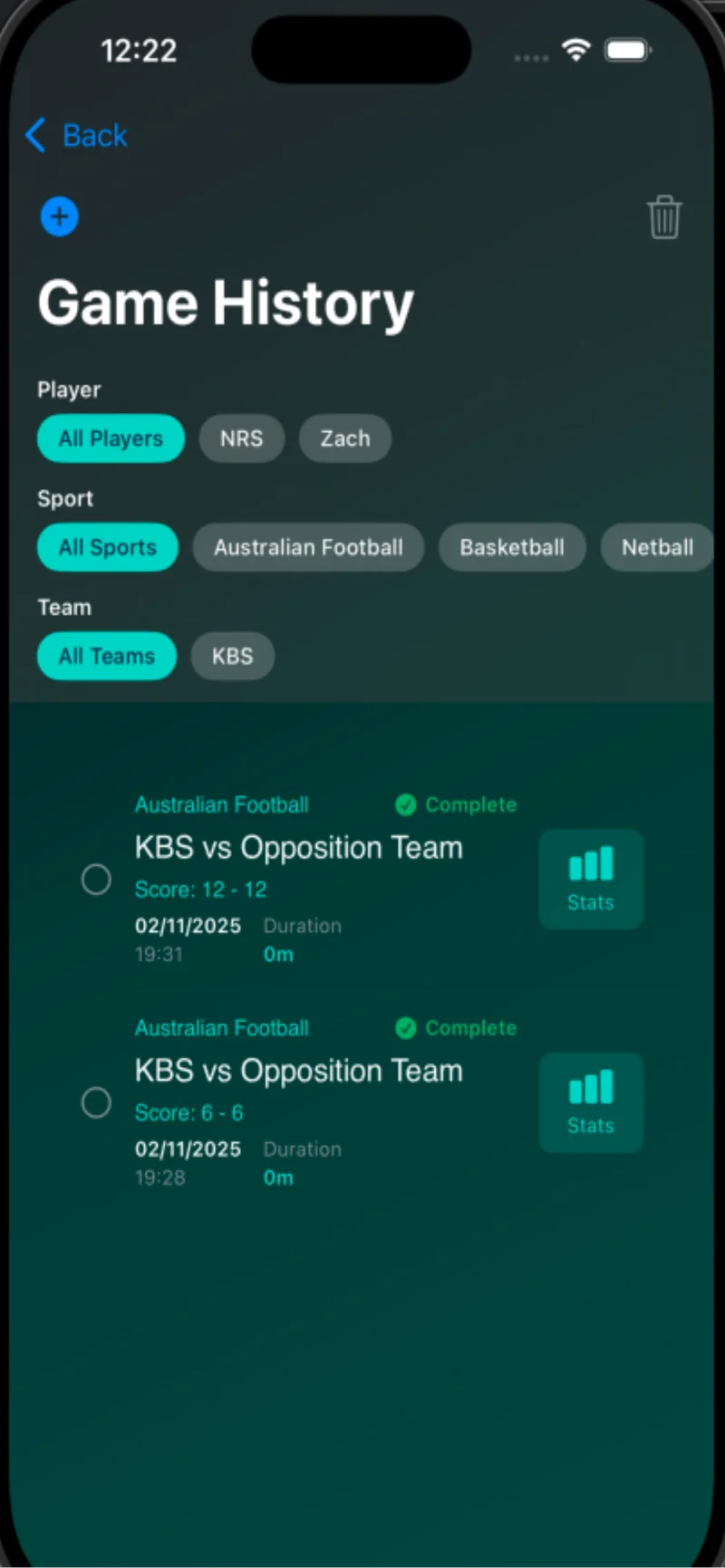
  • Every game saved automatically with date, opponent, score and individual stats
  • Per-game breakdown across all activity categories — exactly what was recorded in each match
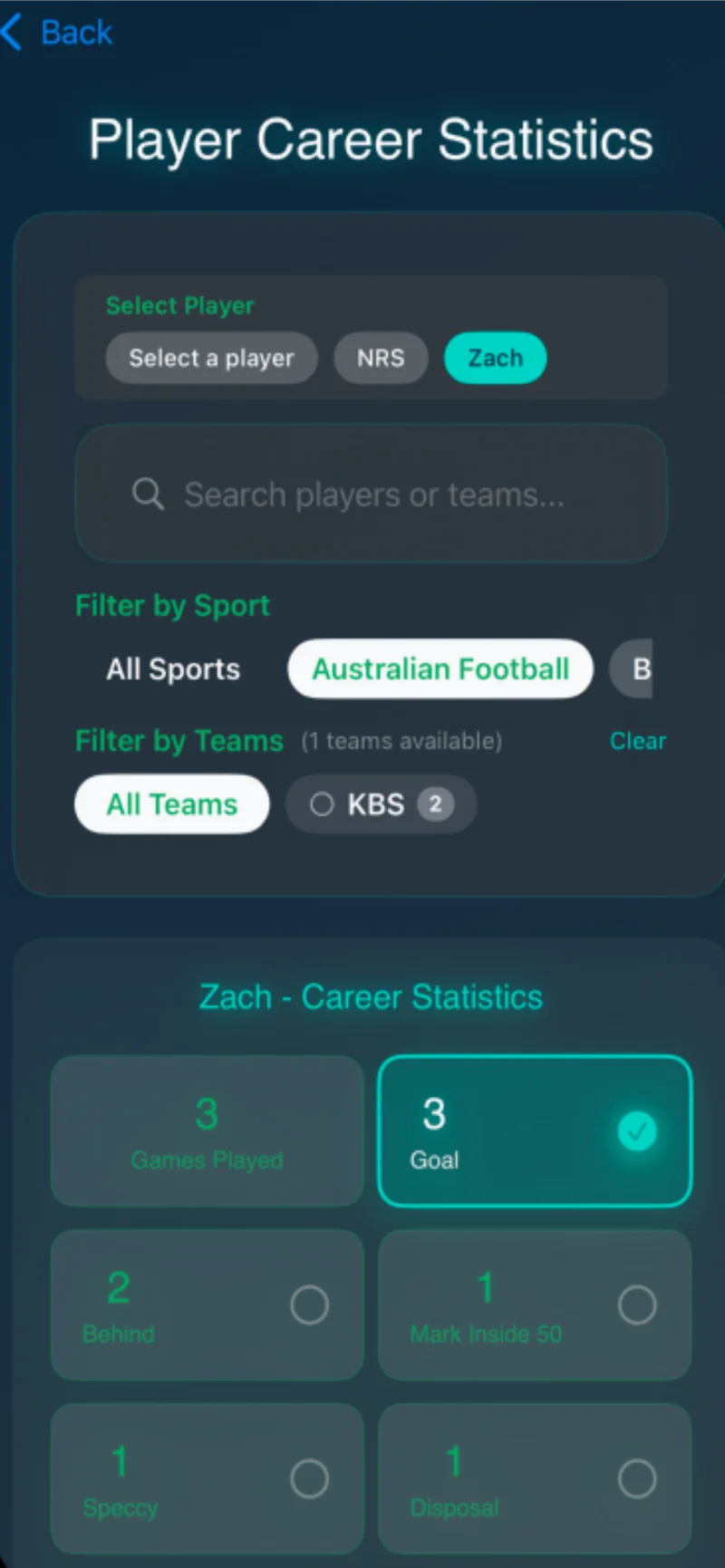
  • Season totals and lifetime career stats across every sport played
  • Search and filter by sport, team, date or season
  • Works completely offline — no signal needed at a suburban ground
Game history showing list of past games with scores and stat summaries

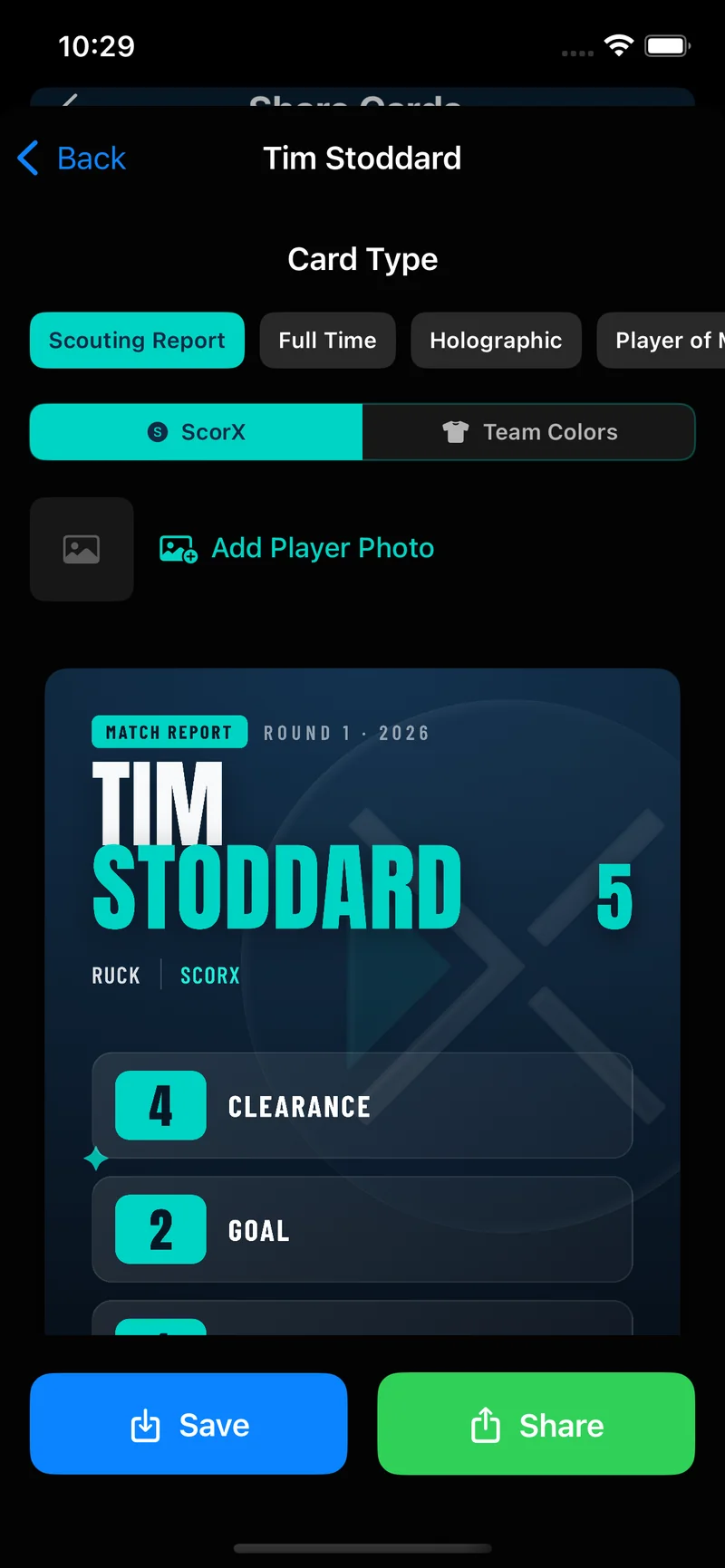
Cards worth sending to the group chat

One style free  |  Full library: Premium

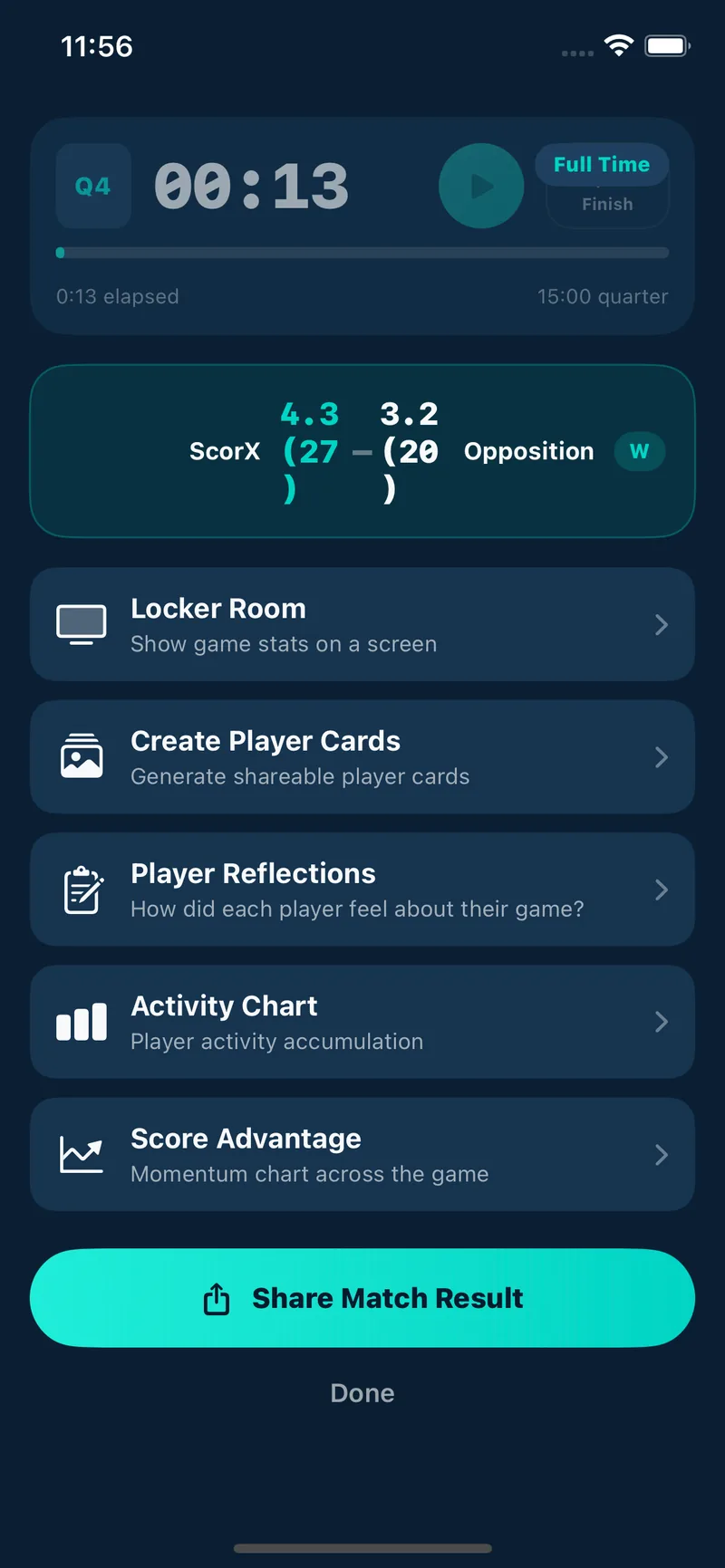
Player Cards turn a good game into something shareable — the athlete's photo, their numbers, their day. This is the part kids actually ask for, and it is the reason the recording habit sticks long enough for the development side to matter.

  • One standard card style — free for everyone, fully shareable to Instagram, WhatsApp or messages
  • Full card library Premium — classic, modern and sport-specific layouts
  • Sticker format Premium — athlete-brand style for older and senior players
  • Custom colour themes and a full card configurator Premium
  • Also try the free sports graphic generator for one-off game-day posts
Player card example showing athlete photo, stats, and sport-specific design

How to Build an Individual Development Plan

A personal development plan for a junior athlete is not a document. It is four honest answers, refreshed every few weeks.

1

Record what actually happens

Goals set from memory drift toward whatever happened last Saturday. Recording each game gives the plan a baseline — what this athlete does, how often, and when in a game they do it.

2

Measure the physical side

Sprint, jump, endurance and strength numbers separate a skill problem from a physical one. Without them, every development plan defaults to "more training" and nobody knows what changed.

3

Pick one or two goals you can check

Two focus areas, tied to actions the athlete controls and that get recorded every game. Not selection, not the scoreboard — things they can go and do this week.

4

Review on real evidence

After about five games or a re-test, check the trend. Improving, flat, or going the wrong way? Then set the next focus. That loop is the whole plan.

New to this? Read when a young athlete should start a development plan and five development goals to set at the start of a season.

Step 1 & 2 — Know Where You Actually Stand

Before any goal is worth setting, you need an honest starting point — on the field and off it.

The activity timeline: when in a game you turn up

Free

Totals tell you how much. The timeline tells you when — and that is usually where the development conversation actually is.

  • Minute-by-minute view of every recorded action, shown as a step chart
  • See where output climbs and where it disappears
  • Spot patterns across games: slow starts, second-half fade, quiet quarters
  • Every action timestamped to the game clock as it was recorded
  • Available for every game across all 16 supported sports
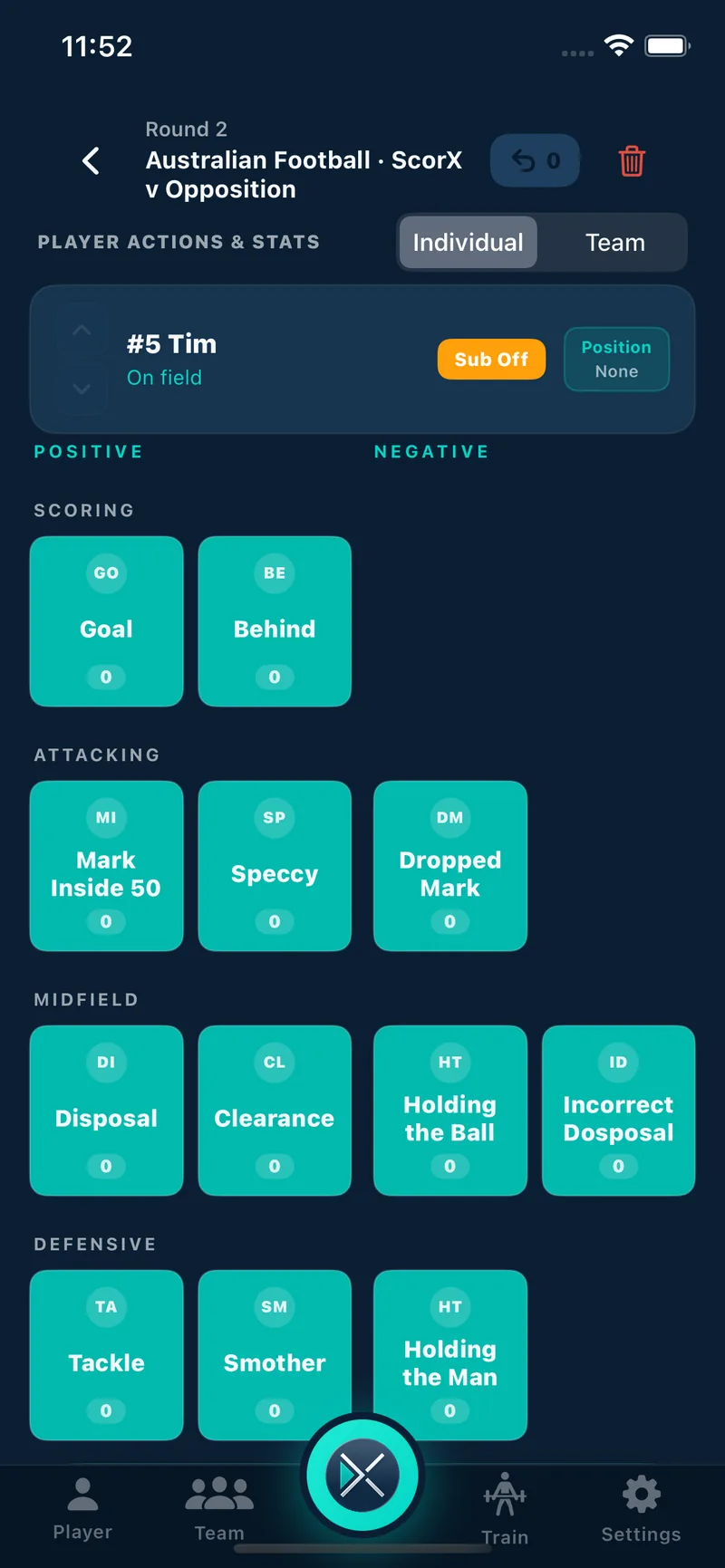
Individual player game view showing actions recorded against the game clock

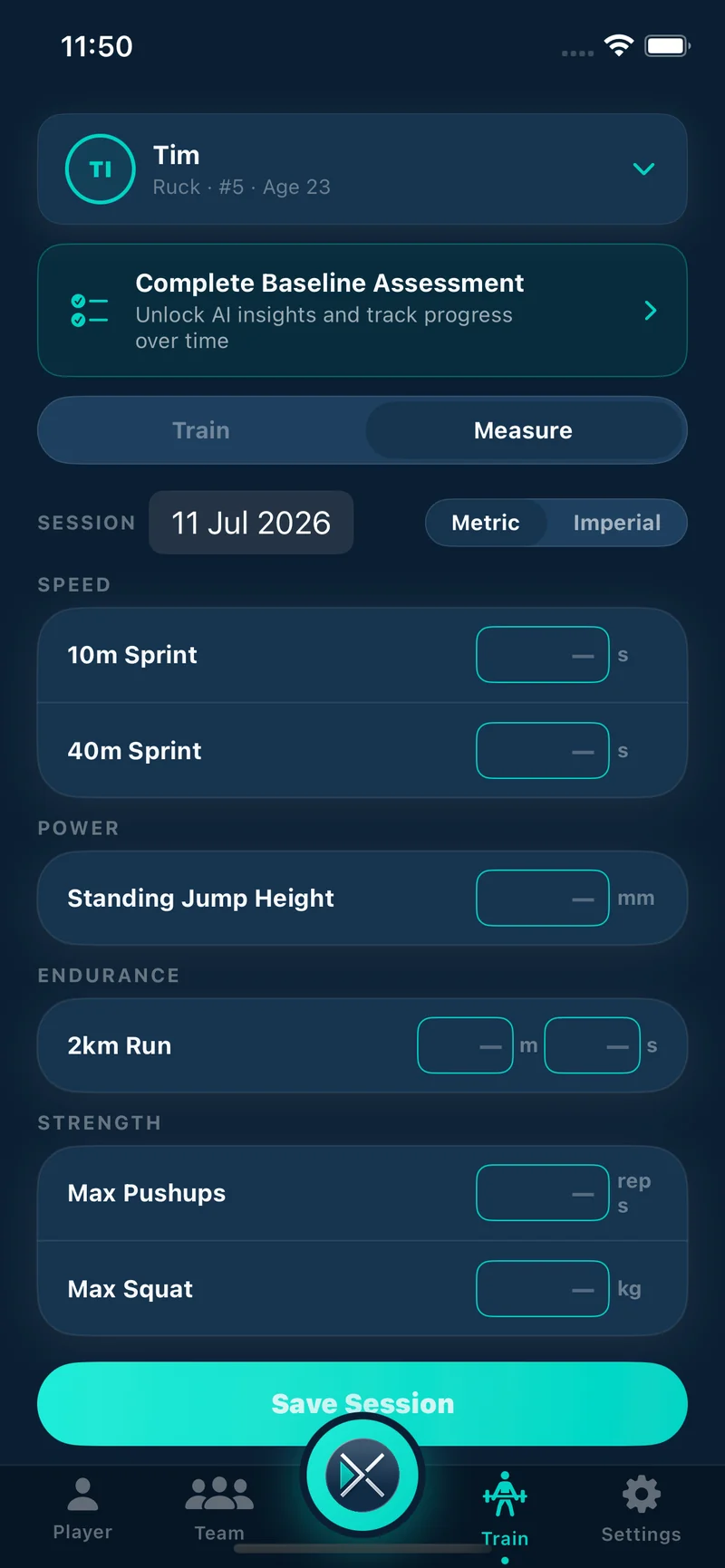
Ten athleticism metrics, re-tested as often as you like

Free — record & track

The same measurements academies take on a testing day, kept privately by the athlete instead of on someone else's clipboard.

  • Speed: 10m sprint, 40m sprint
  • Power: standing jump height
  • Endurance: 2km run, 5km run
  • Strength: max push-ups, max pull-ups, bench press, squat, deadlift
  • Re-test any time — pre-season, mid-season or on a whim
  • Trend indicators show whether each metric is improving, holding or slipping

More on this: why performance academies run testing days.

Athleticism metrics screen showing ten physical measurements with trend indicators

Where those numbers sit against peers

ScorX Premium

A 40m time on its own is a number. Against age and sex benchmarks it becomes a decision about where the next block of work should go.

  • Each metric contextualised against peer averages from published Australian youth sport data
  • Shown simply: Below Average / Average / Above Average / Excellent
  • Points development priorities at the right bucket — technical, tactical or athletic
  • AI athleticism insight connects physical attributes to on-field performance (how sprint speed shows up in contested ball work, for example)
Athleticism metrics with trend indicators, benchmarked against age and sex averages

Step 3 & 4 — Set the Focus, Then Check It Worked

Development guidance built from this athlete's data — not a generic drill list off the internet.

A training focus with the evidence attached

ScorX Premium

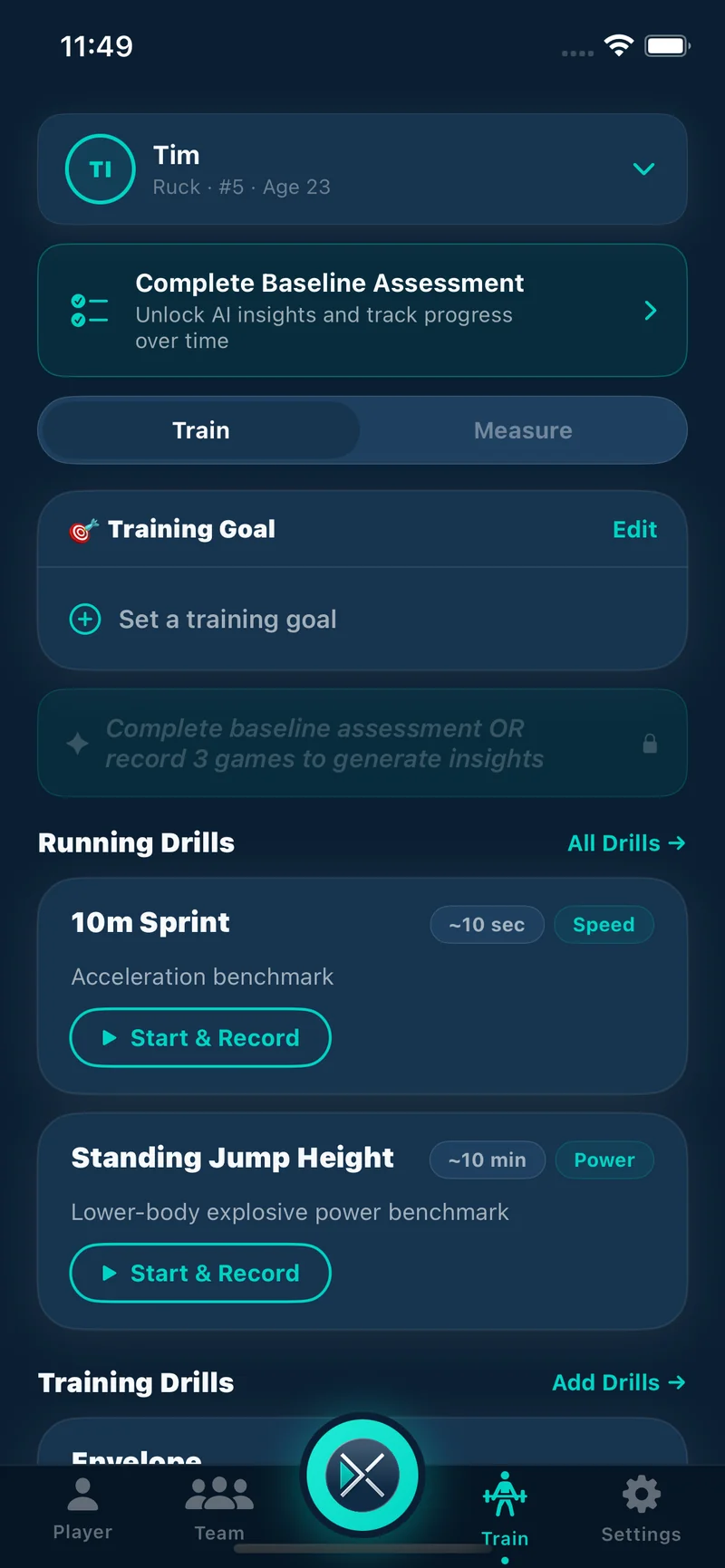
The Train section reads game stats, the athlete's own post-game reflections and their athleticism metrics, then says what to work on and why — in language a 13-year-old can act on.

  • Primary focus area with the evidence behind it — e.g. "disposal efficiency under pressure has dropped in 4 of the last 5 games"
  • Secondary focus area where a second pattern shows up in the stats
  • Training approach — what to work on and how to practise it
  • Session structure — realistic frequency and duration for the athlete's age and load
  • Success indicators — the specific numbers that will move if it is working
Train section showing AI-generated skill development focus with evidence from game data

Plans that hold steady long enough to work

ScorX Premium

A development plan rewritten after every bad game is not a plan. ScorX deliberately waits for enough evidence before changing direction.

  • A new focus can be generated after 30 days or 5+ new games, whichever comes first
  • Stops one outlier game from redirecting months of work
  • Season and career views show the longer trajectory behind the current focus
  • Recommendations are informational — they support a coach, they do not replace one, and a disclaimer says so on first use

Coaches get the team-level version of this in the free post-game triage dashboard.

Career performance analytics showing season trends and development trajectories

Proof You Got Better — and a Record Worth Keeping

The payoff for the planning is being able to show it, to a coach, a selector, or the kid who did the work.

Career Timeline

Free

Every sport, every season, every club, in one visual run. Junior athletes change teams, codes and coaches constantly — the timeline is the one thing that follows them through all of it.

  • A visual journey through an athlete's entire sporting history
  • Spans every sport played and every season recorded in ScorX
  • Shareable with a new coach, a new club, or family
  • Shows how far an athlete has come across years, not just this season
Career timeline showing athlete's full sporting history across seasons and sports

Season Narratives & exportable reports

ScorX Premium

At the end of a season, the numbers get turned back into a story — what improved, what to chase next, and how this year compared to last.

  • Season Narrative — an AI-written season summary grounded in recorded stats
  • Exportable as a PDF for a new coach, a selection panel or the family bookshelf
  • Full report export of player stats, season summaries and development reports
  • Evidence-based conversation starters instead of "how do you think the year went?"
  • Guide: how to review a whole season in 20 minutes
Game and season summary view behind the AI-generated season narrative

What's Free, What's Premium

Recording, celebrating and tracking are free forever. Premium adds the analysis layer.

For athletes Free Premium
Game history & per-game stats✓✓
Activity timeline✓✓
Ten athleticism metrics & trends✓✓
Career Timeline✓✓
Player Cards1 styleFull library
Age & sex benchmarking—✓
Train section & AI development plan—✓
Season Narratives & PDF export—✓

Premium is A$4.99/month or A$49.99/year with a 30-day free trial and no credit card required. Full detail on the pricing page.

Athlete Development FAQ

What is an individual development plan for a young athlete?

An individual development plan is a short, written answer to three questions: where the athlete is now, what one or two things they are working on next, and how they will know it worked. For a junior athlete it does not need to be formal. In ScorX the plan is built from recorded game stats, athleticism measurements and the player's own post-game reflections, so the goals point at something real rather than a guess.

How do I set development goals that actually measure improvement?

Pick goals tied to actions the athlete controls and that get recorded every game — disposals under pressure, defensive efforts, shot accuracy, time on the ball — rather than goals tied to the scoreboard or selection. ScorX records those actions game by game, so a goal like "more contested possessions in the second half" can be checked against the activity timeline instead of debated in the car on the way home.

How does ScorX decide what an athlete should work on next?

The Train section (ScorX Premium) reads game statistics, the player's own reflections and their athleticism metrics, then names a primary and secondary focus area with the evidence behind it. It suggests a training approach, a realistic session structure, and the success indicators that show the work is paying off. It updates after 30 days or five new games, so a single bad game never rewrites the plan.

What athleticism metrics can a young athlete track?

Ten physical development metrics: 10m sprint, 40m sprint, standing jump, 2km run, 5km run, max push-ups, max pull-ups, bench press, squat and deadlift. Recording and re-testing is free, and every metric carries a trend indicator so improvement is visible. Age and sex benchmarking, which shows where an athlete sits against peers, is part of ScorX Premium.

How do Player Cards work?

Player Cards are generated from an athlete's game stats and profile photo, ready to share to Instagram, WhatsApp or the family group chat. One standard card style is free for everyone. ScorX Premium unlocks the full library — classic, modern, sport-specific and sticker formats — plus custom colour themes and a full card configurator.

How long does it take to see progress?

Stats and highlights are there from the first game. Meaningful development trends usually need about five games or a re-test of athleticism metrics, which is roughly a month of a normal junior season. That is why ScorX refreshes the training focus after 30 days or five games rather than after every match.

Do you need a coach to use ScorX as an athlete?

No. An athlete or parent can record games, measure athleticism and build a development plan on their own. If the coach also uses ScorX, match invitations let stat recording be shared during games, and the athlete's history still belongs to the athlete across clubs, teams and seasons.

What does ScorX Free include for athletes?

Complete game history with per-game stat breakdowns and activity timelines, all ten athleticism metrics with trend indicators, the Career Timeline, and one standard Player Card style — with no game, player or team limits. ScorX Premium (A$4.99/month or A$49.99/year) adds the Train section, benchmarking, the full card library, Season Narratives and PDF export.

Record This Weekend's Game. Build the Plan From There.

Download free, record your first game, and see the stats before you decide anything else. Premium is there when you want the benchmarking and the development plan.

Download Free

Latest from the Blog

Guides and performance insights to help young athletes train with purpose and measure real progress.

View all posts