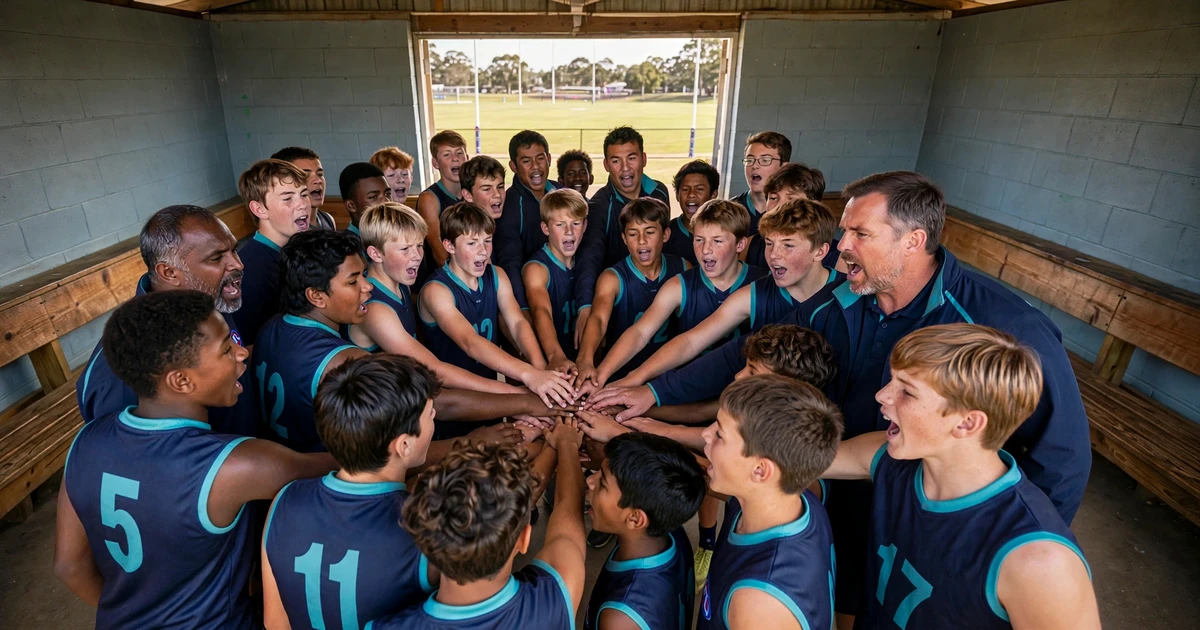
If your boy or girl is playing in a grand final this month, they’re doing something most kids who play community sport never get to do. For a lot of them it’s also a first. Finals only become standard from Under 13, so this may be the first season a result has ever counted at all, let alone gone all the way to a granny.
It’s easy to miss how rare that actually is, mostly because grand final week is so busy. There’s the training, the group chat blowing up, the “have you seen my mouthguard” of it all. Somewhere in the logistics, the fact that this particular event is genuinely uncommon gets lost.
How rare is a grand final, actually?
Do the maths on any local competition and it’s stark. In a typical junior AFL grade, eight to twelve teams play all season, and exactly two of them run out on grand final day. That’s one team in four or five, most years, and that’s before you account for the seasons a good side gets knocked out the week before.
Stretch that across a whole junior career and a kid who makes even one grand final has beaten odds that most of their teammates over the years didn’t. Two grannies across a junior career is a genuinely good run. Some very good players, kids who train hard and improve every season, go through their entire time at a club without one.
The game they’ll still be talking about at eighteen
Here’s the part that’s easy to undersell at thirteen. Grand finals are the games that stick. Not every good game, not every good season, but the grand final specifically. Ask any adult who played junior sport what they remember and it’s rarely a good Round 9. It’s the final. The score, who kicked what, who got a guernsey they didn’t expect.
That’s not just nostalgia talking. It’s the one day the whole team experienced together, at the same intensity, all wanting the exact same outcome. Regular season doesn’t build stories like that. Grand finals do.
Your kid’s teammates will bring this game up for years. At a reunion, in a group chat on the anniversary, randomly at training in three seasons’ time when someone mentions the ground. “Remember the grand final” is a sentence that gets said a lot longer than “remember Round 9.”
Why this is worth telling your kid, carefully
There’s a difference between adding pressure and adding meaning. “This is huge, don’t let the team down” is pressure. “Not everyone gets to do this, and you’ll be talking about it for years” is meaning, and they can usually tell the two apart.
The version that lands well is small and specific, said once rather than repeated all week. Something like: “however Saturday goes, this is one you’ll be telling stories about.” At this age it doesn’t need explaining or dwelling on. Say it, mean it, move on. Over-explaining it gets you an eye roll and undoes the point.
How to help them actually feel it, not just survive it
Most grand final advice is about managing nerves, which matters, but it treats the day like something to get through. A day this uncommon is also worth treating like something to be in, not just endure.
At this age that mostly means getting out of the way. Let them have their pre-game time with teammates rather than hovering. Teens process a big day through their mates more than through their parents, and that’s exactly as it should be. Your job is logistics and a calm car trip, not narration.
It’s also worth actually keeping something from the day, even if your kid rolls their eyes at the idea in the moment. A photo, a scoreline, a card with what they actually did on it. They may not want it at thirteen. They will absolutely want it later, when the details of the day have gone fuzzy and they’re the one telling the “remember the grand final” story. That’s a small part of what ScorX is for: giving a day like this something to point back to that isn’t just a memory getting less reliable every season.
Frequently Asked Questions
How rare is it for a kid to play in a grand final?
Rarer than grand final week usually makes it feel. In a typical junior competition with eight to twelve teams, only two reach the grand final each season, meaning most players in most years don’t get there at all. For a 13 year old specifically it can also be a genuine first, since finals only become standard from Under 13 in most junior AFL competitions. Across a full junior career, making even one grand final is a good outcome, and plenty of strong, hardworking players go through their whole time at a club without one. None of this is meant to add weight to the day. It’s the opposite: knowing how uncommon it is can help both parents and kids notice and enjoy it while it’s actually happening, and understand why it’s the game teammates will still be bringing up years from now, long after most of the season has been forgotten.
Does missing out on a grand final mean a team had a bad season?
No. Most teams in most competitions don’t make the grand final in any given year, including plenty of teams that improved a lot and had a genuinely good season by any measure that isn’t the ladder.
How do I tell my kid that the grand final is a big deal without adding pressure?
Keep it brief, specific and said once, not repeated all week. Something like “you’ll be talking about this one for years” lands as meaning rather than pressure, especially delivered without any mention of the result attached to it.
Why do grand finals get remembered more than regular season games?
They’re the one day the whole team wants the exact same outcome at the same intensity, which builds a shared story in a way an ordinary round rarely does. That’s why “remember the grand final” tends to outlast almost every other memory from a junior sporting career.
ScorX is free to download. If grand final day is coming up, it’s worth having something to look back on beyond the final score.
Related Sideline Blogs
- How to Prepare Your Kid for a Footy Final — The week-before guide, for once you’ve decided the day is worth marking.
- What to Say to Your Kid After They Lose a Final — For the drive home, whichever way Saturday goes.
- Why Your Child’s Stats Look Different from Game to Game — Why one game, even this one, is a single data point in a much longer story.